In 2018, the Federal Department of Health and Human Services’ (HSS) Office for Civil Rights (OCR) republished the rules for disposing of electronic devices, media and data bearing devices for HIPAA […]

In 2018, the Federal Department of Health and Human Services’ (HSS) Office for Civil Rights (OCR) republished the rules for disposing of electronic devices, media and data bearing devices for HIPAA […]
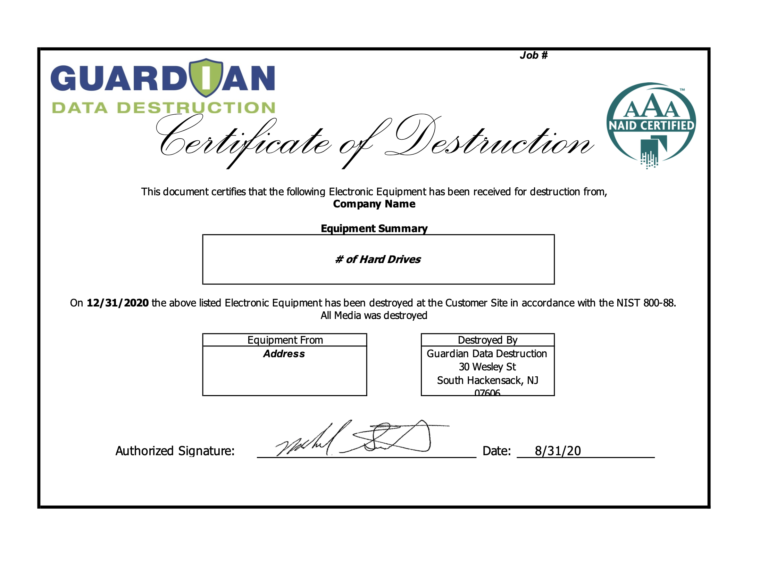
Perhaps you’ve been asked to provide a certificate of data destruction due to an audit or routine chain of custody verification. Or worse, the fallout from a data breach. Ensure
If it’s time to replace your IT equipment, double-check that your data security policy includes a secure chain of custody and an electronic data destruction process. This ensures that your
Shredding electronics is the most secure and cost-effective way to dispose of all types of end-of-life computer hard drives, solid state drives, media tapes, printed circuit boards, tablets, smartphones, CDs
Oftentimes, unwanted IT equipment is in a limbo, interim stage between usage and refresh or replacement. How can you minimize the risk of a data breach and potential litigation or
In the data destruction business, there are industry acronyms that we assume everyone understands: “ITAD”, Information Technology Asset Disposition, is one of the most common. What ITAD really means is
Flip on the lights of any storage room and you will be shocked by the amount of printers and computers that have live data on them and deemed “out of

Department of Financial Services (DFS) Rules 23 NYCRR 500 regarding secure data disposal took effect this March. Here’s our take – the good, the bad, and the ugly – as
Securely disposing of end of life IT Assets onsite at the origin location is the safest way to avoid a HIPAA data breach. As many healthcare firms consider mobile onsite shredding,